5 Signs Your Facilities Management May Be Falling Behind

In 2026, the facility management industry is projected to reach a market size of 32.4 billion USD (approximately 46 billion AUD) according to recent analysis. Alongside this rapid growth comes an unprecedented set of demands for facilities managers. As physical spaces become more complex and regulatory scrutiny intensifies, many organisations find themselves clinging to legacy processes that no longer serve them.
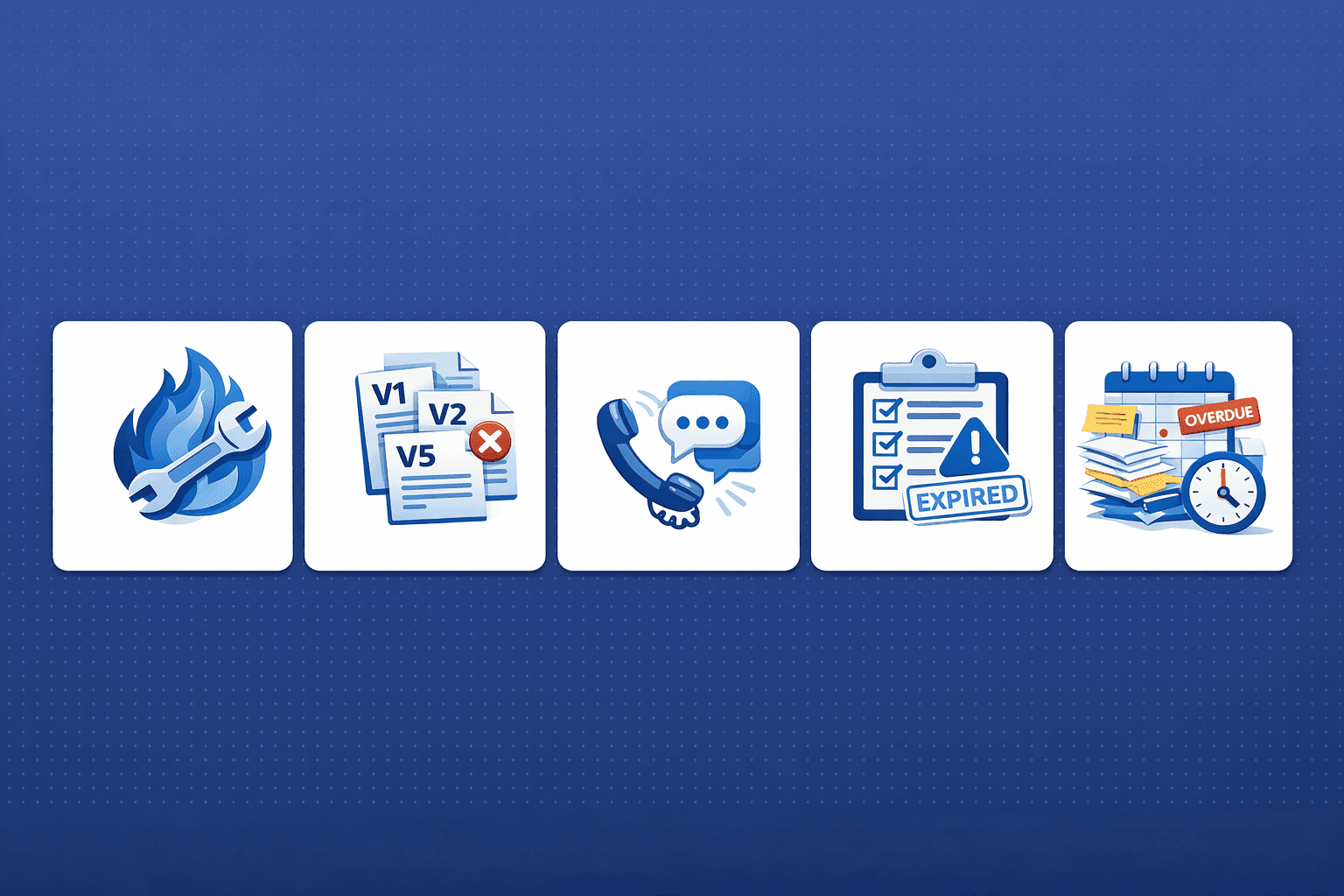
Are you still in control of your portfolio, or are you just reacting to the loudest fire? Here are the five definitive signs that your facilities management strategy is outdated, and how you can reclaim control.
1. Waiting for Equipment to Break Before Taking Action

If your team spends the vast majority of their time responding to emergency breakdowns and very little on scheduled inspections, your strategy is officially behind the curve. In the world of facilities management, being reactive is the most expensive way to operate.
Reactive maintenance is significantly more expensive than planned preventative work. When you wait for a pipe to burst or an HVAC unit to fail, you are paying for both the repair and the emergency call-out fees and the "uptime" lost by your residents or tenants. If your maintenance officers are stuck in a non-digitised world they cannot forecast properly.
The Solution: Transition to automated preventative maintenance. Instead of relying on a human to remember that the fire extinguishers need testing or the gutters need clearing, you can set up recurring maintenance schedules directly within the platform.
How It Works In FMClarity:
Set and Forget: You can preset work orders using custom time intervals.
Automatic Distribution: Before the scheduled date arrives, the system automatically generates a work order and sends it directly to the relevant internal staff or external contractors.
Real-Time Progress Tracking: Stakeholders can update the progress and completion status directly within the app on their phones.
Audit-Ready Logs: Because communication happens inside the platform (Slack-like chat), you have a real-time single source of truth that proves the maintenance was actually done, removing the need for constant phone calls and chasing updates.
2. Stakeholders Looking at Different Versions of Documents

In traditional facilities management information is often fragmented across individual email threads, local hard drives, and physical filing cabinets. A definitive sign that your organisation is falling behind is when various stakeholders involved in a project are looking at different versions of the same document.
When we talk about stakeholders, we are referring to the entire operational chain:
The Facility Manager: Who might be tracking a maintenance schedule on an Excel sheet saved to their desktop.
The Site Manager: Who is looking at a printed site plan from 2023 that doesn't show recent structural changes.
The External Contractor: Who is still working off an outdated scope of work sent via email three months ago.
The Finance Team: Who are trying to reconcile an invoice against a contract version that has since been superseded.
Why this is a Critical Red Flag: These different versions create a massive operations gap. If your team is relying on outdated information, the risk of error skyrockets, leading to duplicated work, expensive repair mistakes, and serious compliance gaps. In a high-compliance environment like Aged Care or Education, presenting an outdated certificate during an audit can result in immediate failure and potential loss of operating licenses.
The Solution - Establishing a Single Source of Truth: Modern facilities management demands that there is only ever one version of reality. Facility management software eliminates this chaos by providing a platform where every stakeholder has access to the exact same information in real-time.
How It Works In FMClarity:
Categorised Digital Vault: Within the system, there is a dedicated space where all documents are neatly organised by specific facility and category.
Instant Accessibility: Authorised users, such as Facilities Managers or Portfolio Managers, can upload documents directly to the relevant site. Once uploaded, the file is visible to all stakeholders with the appropriate permissions.
Rapid Retrieval: Users can find the exact file they need in seconds, reducing the distance blindness caused by manual filing systems.
Integrated Communication: By using Slack-like communication within the platform, every photo, comment, and document update is timestamped and attached to the relevant task, creating a complete audit trail.
3. Inefficient Communications Scattered Across Personal Channels, Emails, and Phone Calls

In many organisations maintenance communication is a significant drain on productivity. A definitive sign that your facilities management is falling behind is a daily routine dominated by an endless stream of phone calls, SMS messages, and fragmented email chains just to get a simple status update. Whether you are coordinating with an internal maintenance officer, a specialist supplier, or an external contractor, this fragmented approach requires an immense amount of time and manual effort to keep everyone aligned.
Facilities managers often find themselves chasing their tails to confirm if a job has started or been completed, leading to a significant operations gap that slows down the entire team. Without a centralised, real-time record of these conversations, you are essentially paying your team to be full-time switchboard operators rather than strategic managers.
The Solution - Real-Time, Contextual Collaboration: By moving all dialogue into a single, unified system, you eliminate the need for external task-switching and reduce the administrative friction that plagues manual processes.
How It Works In FMClarity:
Unified Work Order Chat: FMClarity replaces the chaos of external messaging with a built-in communication hub where every single work order has its own dedicated chat interface.
Real-Time Engagement: Portfolio Managers can chat directly with internal maintenance teams and external suppliers in real-time within the platform. No more emails or phone calls are required to verify status.
Role-Based Access (Channels): Security and privacy are maintained through multiple permission levels, ensuring different stakeholders have access to specific communication channels based on their roles and responsibilities.
4. Being Clueless About the Most Recent Compliance Requirements

Ignorance is not a legal defence. A definitive sign that your facilities management is falling behind is being "clueless" about new or updated standards until a problem occurs. Whether it is the three-yearly National Construction Code updates or the newly effective strengthened Aged Care Quality Standards (applied from 1 November 2025), the regulatory burden on FM managers has always been high.
If you are managing your portfolio without a live overview, you are basically flying blind. There becomes a reliance on "not hearing any bad news" as the compliance strategy. You may be unaware that a fire safety certificate has expired or that a contractor is performing works without a valid licence. Failing to comply leads to fines and penalties, and puts your tenants, residents, and brand reputation at risk.
The Solution - A Perpetual State Ready for Audit: In order to be well-informed of your facilities’ compliance performance, you gain total clarity through a system that monitors every regulation and asset for you, acting as a control tower for your portfolio.
How It Works In FMClarity:
Traffic Light Compliance Overview: The system provides a live dashboard that monitors document expiries and maintenance schedules. Green means you're safe, amber is a warning, and red means action is required immediately.
170+ Pre-Configured Rules: FMClarity comes with over 170 rules aligned with Australian Standards and Building Codes right out of the box. As new regulations are introduced, the system helps you stay aligned.
Contractor Compliance Locking: The platform can automatically stop work orders if a contractor's insurance or licences are missing or expired, protecting you from hiring uncertified labour.
Instant Audit Reporting: When an auditor asks for proof you don't need to hunt for files. You can pull up a timestamped, centralised audit trail of every inspection and certificate in seconds.
5. Overwhelmed by Work Orders and Lacking a Clear Schedule

A definitive sign that your facilities management has reached a breaking point is when your team feels overwhelmed by the sheer volume of tasks, yet has no visual roadmap of the daily schedule. When you have hundreds of open work orders across multiple sites, a simple list or an overflowing inbox is a recipe for disaster.
Without a visual and filterable way to manage the load high-priority repairs get buried, and critical deadlines are missed. You will end up spending more time deciding what to do next than actually doing it, and your maintenance logs are a chaotic mess of overdue tasks with no clear priority.
This lack of coordination inevitably leads to an increase in occupier complaints. When an urgent repair isn't handled because the work order was simply lost in the shuffle, or when you can't tell which contractors should be on-site today, you lose control of your facility's operational flow.
The Solution - Visual Scheduling and Smart Orchestration: Instead of a chaotic list, you need a centralised, real-time control tower that provides a visual roadmap of every task across your entire portfolio.
How It Works In FMClarity:
Synchronised Calendar Management: FMClarity provides all users with role-defined access to a custom, synchronised calendar. Whether it’s upcoming preventative maintenance, lease expiries, or reactive works, the calendar provides live updates to keep everyone aligned.
Colour-Coded Priority Tracking: Events in the calendar are colour-coded based on priority and status. This allows you to see at a glance which Red urgent tasks need immediate attention and which Green routine tasks are on track.
Flexible Work Order Filtering: You can cut through the noise using advanced filters. Sort and view work orders by urgency, completion status, specific facility, and so on, ensuring the most critical tasks are always front and centre.
Seamless Transitions: Clickable events in the calendar open the relevant work orders directly, and follow-up or corrective work orders can be instantly converted into reactive jobs to ensure no task falls through the cracks.
Automated Notifications and Alerts: The system issues notifications and alerts users to non-compliance or missed deadlines, ensuring you stay on top of your facilities’ compliance performance before an occupier has the chance to complain.
Simplicity as a Weapon
The difference between a facility that thrives and one that falls behind is clarity.
In the high-stakes world of modern property management, you cannot afford to waste time on manual processes. Every hour spent chasing a contractor, every manual update to a spreadsheet, and every minute spent panicking before an audit is a loss of time that could have been invested in improving your assets.
In 2026 the competitive edge belongs to those who embrace technology. The transition to a unified and automated facilities management software platform like FMClarity delivers immediate and measurable impact. By establishing a single source of truth and automating the manual work, organisations are seeing massive reductions in administrative overhead and operational costs.
Take the team at Viva Leisure, for example. Before moving to FMClarity, their processes were heavily manual. After implementing FMClarity to manage their portfolio, they reclaimed over 720 hours of administrative time in just two months. The equivalent of 94 business days, time their team can now spend on strategic growth rather than paperwork.
Ready to leave the legacy headaches behind?
Don't wait for your next emergency to realise your system is falling behind. Join the organisations that have achieved massive reductions in admin and total peace of mind regarding facilities management.