A CFO’s Guide to the ROI of Facilities Management Software


As a CFO of a facility-occupying organisation, you are likely scrutinising every line item and seeking ways to control costs to keep your bottom line healthy. But have you considered that your daily operations across your facilities might be hiding a massive efficiency leak?
In 2026’s challenging economic landscape, where persistent inflation and rising labour costs continue to squeeze corporate budgets, CFOs of facility-occupying organisations, such as healthcare and education service providers, need to be more forward-thinking in facility management to develop a cost-effective approach to long-term sustainability.
The traditional view of facilities management as a passive support system is becoming a relic of the past. In today’s economy, every inefficient process acts as a silent loss to your profitability. Modern CFOs need to shift from an administrative perspective to a strategic lens, viewing facilities management software as a critical lever for margin protection.
The Hidden Cost in Your Balance Sheet

For many organisations the true cost of maintenance remains hidden. Beyond direct contractor invoices, there are operational overhead and process inefficiencies incurred during the process.
When an organisation lacks a centralised digital system it relies on a fragmented web of emails, phone calls, and manual spreadsheets. This leads to a serious waste of human resources that quietly erodes profit margins.
Labour misallocation: High-value staff members spend hours daily acting as dispatchers for repair requests.
Lack of data integrity: Instead of making informed decisions regarding the management of assets and facilities, a lack of data integrity turns long-term financial planning into guesswork.
Compliance risk: Missing a single essential safety measure report can result in fines or emergency repair fees that dwarf the cost of any software subscription.
Facilities Management Software as a Cost-Effective Investment
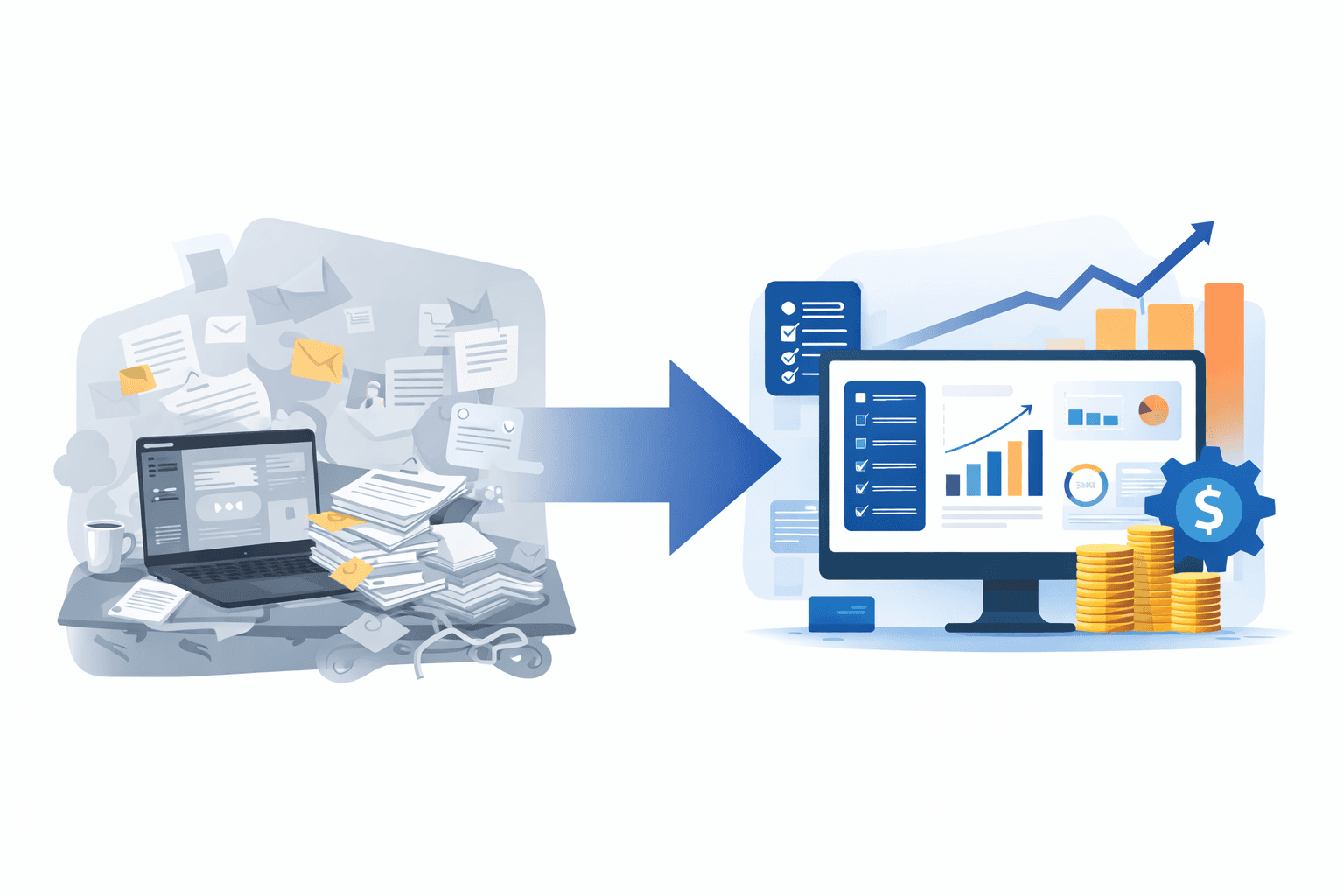
Forward-thinking CFOs are moving away from manual approaches and adopting facilities management software that focuses on the occupiers. This represents a fundamental shift in how an organisation manages its operational overhead.
The purchase of FM software may seem like an expense, but a truly effective system acts as a margin-protection tool. A solution like FMClarity embodies this approach. Because FMClarity is built for occupiers and designed with a seamless cross-platform experience, it ensures rapid adoption across the entire organisation. When a system is easy to use, data is captured correctly, eliminating the expensive repetitive tasks and communication silos. This ensures that resources are focused on value-added activities rather than correcting data entry errors.
In a low-margin business environment, every minute reclaimed from administrative tasks flows directly to the bottom line. By providing transparency and replacing opaque email chains with live chat within work orders, FMClarity removes the administrative overhead from your staff. When you reduce time spent on triage, contractor assignment, and invoice approval, you expand your operational capacity without increasing headcount.
Beyond day-to-day repairs, FM software enables a shift toward automated preventative maintenance. By using the system as a comprehensive repository for asset health and service reports, CFOs can transition from reactive, emergency spending to planned, predictive maintenance. This study shows that preventive maintenance can reduce or eliminate the risk of equipment failure through scheduled interval servicing, thereby extending the asset’s service life. Extending the life of a major plant item, such as an HVAC system or lift, by even two or three years significantly optimises cash flow and improves the long-term return on your fixed property assets. (Note that FMClarity does not impose rigid requirements for asset data entry, allowing your organisation to start small and scale as your data matures. See more details here).
While the transition to advanced FM software requires a measured initial investment, the long-term returns from extended asset lifecycles, reduced operational friction, and a more productive workforce are undeniable. By choosing a solution like FMClarity, CFOs are securing a strategic partner that transforms property operations from a cost centre into a resilient, value-driving engine for the business.
Case Study: How Mercy Connect Reclaimed 1,500+ Human Hours

To understand the tangible ROI of modernising FM, we look to Mercy Connect, an essential NDIS service provider. In the disability support industry, margins are low. Every dollar spent on administrative overhead is a dollar taken away from frontline care.
Mercy Connect manages a complex portfolio of over 30 sites with a workforce of more than 300 staff. Before implementing FMClarity, their maintenance process was decentralised and labour-intensive. By transitioning to a centralised FM software, they empowered their entire staff to report maintenance requests through a single portal, managed by a centralised team.
The financial impact was profound. Mercy Connect estimated that by saving time on every reporting and follow-up action, they have reclaimed at least 1,500 human hours over the past few years. Max Wang, the CFO at Mercy Connect, explains how this efficiency directly impacts their financial health:
"FMClarity is able to support over 30 sites of Mercy Connect and enabled our 300-plus staff to be able to utilise the system to report any maintenance request through the system. That improved our effectiveness in any maintenance-related matters, which is supporting our bottom line and our margin."
Beyond the hours saved, the system provided statistical reports on work orders, allowing Mercy Connect to present clear data to key stakeholders and keep the entire organisation on the same page. For a CFO, this transparency is the difference between guessing your budget and knowing it.
Quantifying the ROI

To understand your return on investment when considering FM software, we can utilise the FMClarity ROI Calculator. Since every organisation has a unique operational structure, this tool allows you to input your specific data, including average task durations, facility management salary scales, and the number of properties in your portfolio.
By analysing these custom variables, the calculator generates an objective assessment of your potential return on investment. This level of transparency enables you to visualise your specific labour cost reductions and total annual savings, providing a robust business case for implementing FM software.
When these operational efficiencies are aggregated across an entire portfolio, the cumulative reduction in labour costs is transformative. Client feedback indicates the platform saves approximately 60% to 70% of administrative time. In a low-margin environment, these savings protect the bottom line and provide the capital necessary for long-term sustainability.
Strategising for 2026

As we navigate the economic complexities of 2026, the role of the CFO has evolved from a mere custodian of capital to a strategic architect of operational sustainability. Modernising your facility management is a crucial investment in your organisation’s long-term sustainability.
To begin this transition, we recommend a targeted audit of your current facility management workflows to identify areas of low human productivity. Focus your investigation on three key areas:
Administrative Friction: Quantify the hours your highly skilled staff spend on manual fault reporting and contractor coordination.
Data Integrity: Assess whether your current reporting enables precise CapEx forecasting or if decisions are based on anecdotal evidence.
Compliance Transparency: Verify if your essential safety measure documentation is audit-ready and centralised, or scattered across disparate locations.
For forward-thinking CFO’s the critical financial question is: how many more thousands of human hours can your organisation afford to lose by maintaining the status quo? As evidenced by Mercy Connect’s 1,500-hour recovery, the cost of inaction is a silent tax that leaves your organisation lagging behind industry leaders.
Quantify Your Potential Savings
Understanding your specific return on investment is the first step toward strategic asset stewardship. Our ROI Calculator is designed to provide you with a bespoke analysis based on your unique organisational data.
Click here to access the ROI Calculator and generate your comprehensive ROI report