The Hidden Cost of a Good Enough Facilities Software
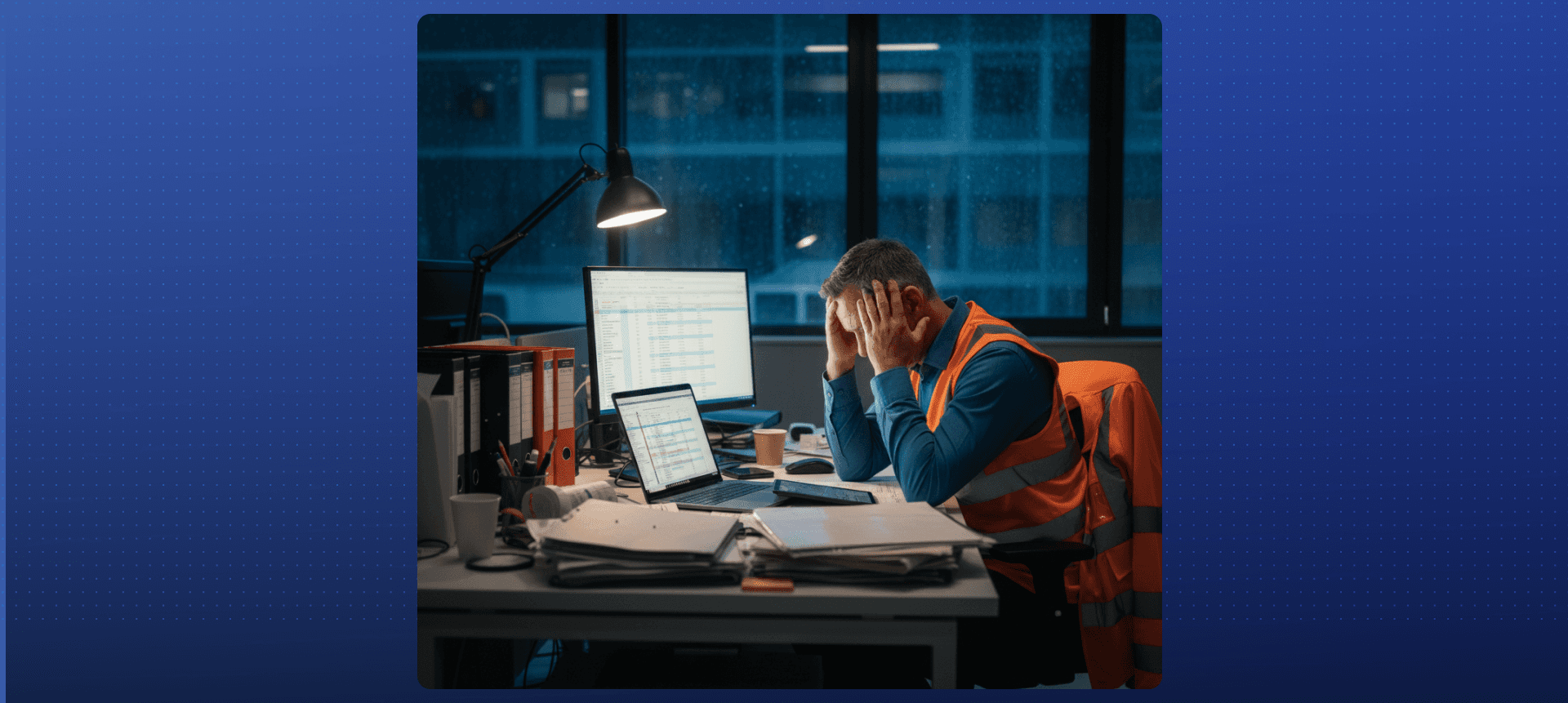

In the high-stakes world of facilities and asset management, there is a dangerous phrase that often haunts the hallways: "it’s fine for now." When it comes to your facilities management software, "fine" is a silent killer. It’s the difference between facilities that thrive and a team that is perpetually on the brink of exhaustion.
We call this Operational Burnout and it’s the hidden tax you pay for sticking with legacy systems or "good enough" spreadsheets.
For many organisations in Australia, the transition from manual processes to digital tools was supposed to be the finish line. In reality, if your facilities management software in Australia isn't evolving with the complexity of modern compliance and tenant expectations, it’s not a tool but a hurdle.
Is Your Software Burning Out Your Team?

Burnout doesn't usually happen because of a single catastrophic failure. It’s a "death by a thousand cuts" scenario driven by software that demands more from the user than it gives back.
Here are the triggers that suggest your current facility management software is failing you:
The "Double Entry" Fatigue
Do your Facility Managers (FMs) spend more time typing data into a system than they do actually walking the floors? If your team has to record an issue on paper, email a contractor, and then manually update a portal, you are paying for triple-handled data.
The Cost: This redundancy leads to data fatigue. When people are tired of entering data, they stop doing it accurately. Your source of truth becomes a source of fiction.
Compliance Anxiety and "Audit Dread"
In the Australian regulatory landscape compliance isn't optional. If the mere thought of an upcoming ESM (Essential Safety Measures) audit sends your team into a week-long frenzy of digging through folders and lost emails, your software is failing its primary mission.
The Cost: High-stress environments lead to high turnover. If your facilities management software doesn't offer a "one-click" audit trail, you are gambling with your team's mental health and your company's liability.
The "Black Hole" Contractor Experience
A facility is only as good as its vendors. If your software makes it difficult for contractors to receive work or purchase orders, upload invoices, or check in on-site, they will prioritise other clients over you. Your team then spends hours on the phone chasing updates that should have been automated.
Why 'Good Enough' is Losing You Money
The "good enough" trap is usually a financial one. Decisions are made based on the upfront licence cost rather than the Total Cost of Ownership (TCO).
The "Good Enough" Approach | The FMClarity Approach |
Low initial software cost | Higher ROI through time saved |
Manual report generation (4 hours/week) | Automated, real-time dashboards |
Siloed data (Spreadsheets + Email) | Single source of truth |
Reactive maintenance focus | Proactive, data-driven strategy |
When you settle for subpar facilities management software, you aren't saving money; you are simply shifting the cost onto your payroll.
The Australian Context: Why 'Local' Matters

Choosing facilities management software in Australia isn't just about supporting local business; it’s about context. The Australian market has specific challenges:
Geographic Dispersion: Managing assets across states requires robust mobile-first technology.
Specific Compliance: Navigating Australian Standards (AS 1851-2012, etc.) requires a system that understands local nuances.
Workplace Health and Safety (WHS): Strict local laws mean your software must be a shield, not just a filing cabinet.
Breaking the Cycle: Moving from Reactive to Proactive
To solve operational burnout, you must pivot the role of your FM team from firefighters to strategists.
Centralise Communication: Stop the "inbox shuffle." All communication regarding a work order should live within the task itself.
Automate the Mundane: If a task happens every month, the software should trigger it, assign it, and track it without human intervention.
Data-Driven Decision Making: Use your facility management software to identify which assets are "frequent flyers" (those that cost more to repair than to replace).
True operational efficiency isn't about working harder; it's about building a system where the easiest path is also the correct one.
Don't Settle for 'Fine'
Operational burnout is a choice. It is a choice made to prioritise short-term software savings over long-term human and operational health.
If your team is exhausted, if your data is a mess, and if your compliance is a question mark, it’s time to stop saying "it’s fine for now." Modern facilities management software should be the wind at your back, not a weight on your shoulders.
At FMClarity, we specialise in removing the friction that causes burnout. We believe that software should be intuitive, Australian-compliant, and, above all, helpful.