Facility Management Software in Australia


In the property and facility management sector in Australia, the days of managing various assets using spreadsheets and whiteboards are rapidly fading. The digital transformation of the Australian built environment is no longer a future trend but an operational scope.
For facilities managers in different sectors, the challenges they face have shifted. Ensuring clear financial responsibilities, risk control, and comprehensive management of the entire asset portfolio, considering the challenges of rising labour costs and increasingly complex Work Health and Safety (WHS) regulations.
Efficiency is the only way forward.
However, true efficiency requires more than digitising old processes. In a market like Australia where labour costs are high, the wrong technology choices can do more than just waste budgets, they can create operational blind spots. In these blind spots, the silent threat of unreported malfunctions can quietly accumulate until it evolves into a catastrophic risk.

The Australian Need
Australia has one of the highest labour costs in the world. Whether it is the internal maintenance or the external contractors (electricians, plumbers, HVAC technicians), every hour spent on administrative tasks will directly increase your operational expenditure (OpEx). General platforms usually require fussy data entry. If a technician spends 20 minutes operating in a complex interface, then you have lost the efficiency race. Consequently, the market requires zero-training usability; the software must be intuitive enough that ordinary contractors can use it immediately without needing an intricate user manual.
In several legal systems, the compliance component is a mere formality. In Australia, due to the stringent legal obligations surrounding WHS, it is a matter of legal liability. Many global tools view compliance as a secondary aspect, or just a simple checklist. They do not possess the logical capability to handle the requirements of Essential Safety Measures as specified by Australia. So the requirement here is for a system that can act as a hard gatekeeper and protect the organisation from risks.
In Australia, commercial buildings emphasise the NABERS rating. A higher rating indicates a higher rental return and asset value. An excellent FM can incorporate energy monitoring systems to flag unusual energy draws so they can implement strategies to improve their NABERS star rating. According to the latest industry report, commercial office buildings with NABERS 5-star ratings or above have rental returns that are approximately 1% to 5% higher than typical assets. Combined with decreased operational costs and greater tenant retention, this is the phenomenon referred to as the green premium. In contrast to this, the current market situation is indicating serious risk of a "brown discount" on assets without energy efficiency.
The ultimate FM structural pressure lies in the dependency of the supply chain. Unlike other markets where maintenance is largely self-performed by internal staff, Australian FMs rely heavily on an outsourced delivery model. Traditional software often acts like an internal island, unable to incorporate contractors into the workflow. Modern Australian operations require a platform that can provide supplier self-service functions, enabling external suppliers to directly make quotations, arrange, and issue invoices within the system, ensuring every stakeholder operates from the same set of facts.

The Strategic Divergence: Computerised Maintenance Management System (CMMS) vs. Integrated Work Management System (IWMS)
The most common mistake made by buyers is confusing the Computerised Maintenance Management System (CMMS) with the Integrated Work Management System (IWMS). Although they may seem similar on the surface, they have fundamentally different strategic goals and are applicable to different operational models.
Industrial CMMS (like MEX or MaintainX and other systems) started in factory workshops and their core is in manufacturing, heavy industries, and utilities. The systems are designed to optimise the operational time of sophisticated equipment like conveyors, production lines, or mining trucks. Their strengths are in advanced engineering, vibration analytics, IoT predictive maintenance, and the associated analytics. Also, they are great at inventory and warehouse spare parts complex management.
However, these systems have obvious drawbacks for the general facility manager. Their interfaces are often overly complex, making FM difficult for non-technical personnel, such as Aged Care workers or school administrators, resulting in low adoption rates. Moreover, they often are limited by a lack of property context, treating a building just like a machine and missing the nuances of leases, floor plans, and tenant communication.
Conversely, a Modern Australian IWMS is designed specifically to the Australian industries such as construction, commercial office, retail, healthcare, educational services, and strata management. Their essential feature is the integrated relationship between process, people, and supply chains. The platform should provide comprehensive visibility by consolidating maintenance, asset, compliance, and contractor management into one unified place. Adopting a user-centred design philosophy means that the platform can cater to maintenance officers as well as other stakeholders, meaning adoption is widely accepted.
The strategic conclusion is very clear. If you are in charge of managing a factory, then you need a CMMS system. If you manage a portfolio of buildings and people, then you need an IWMS system.
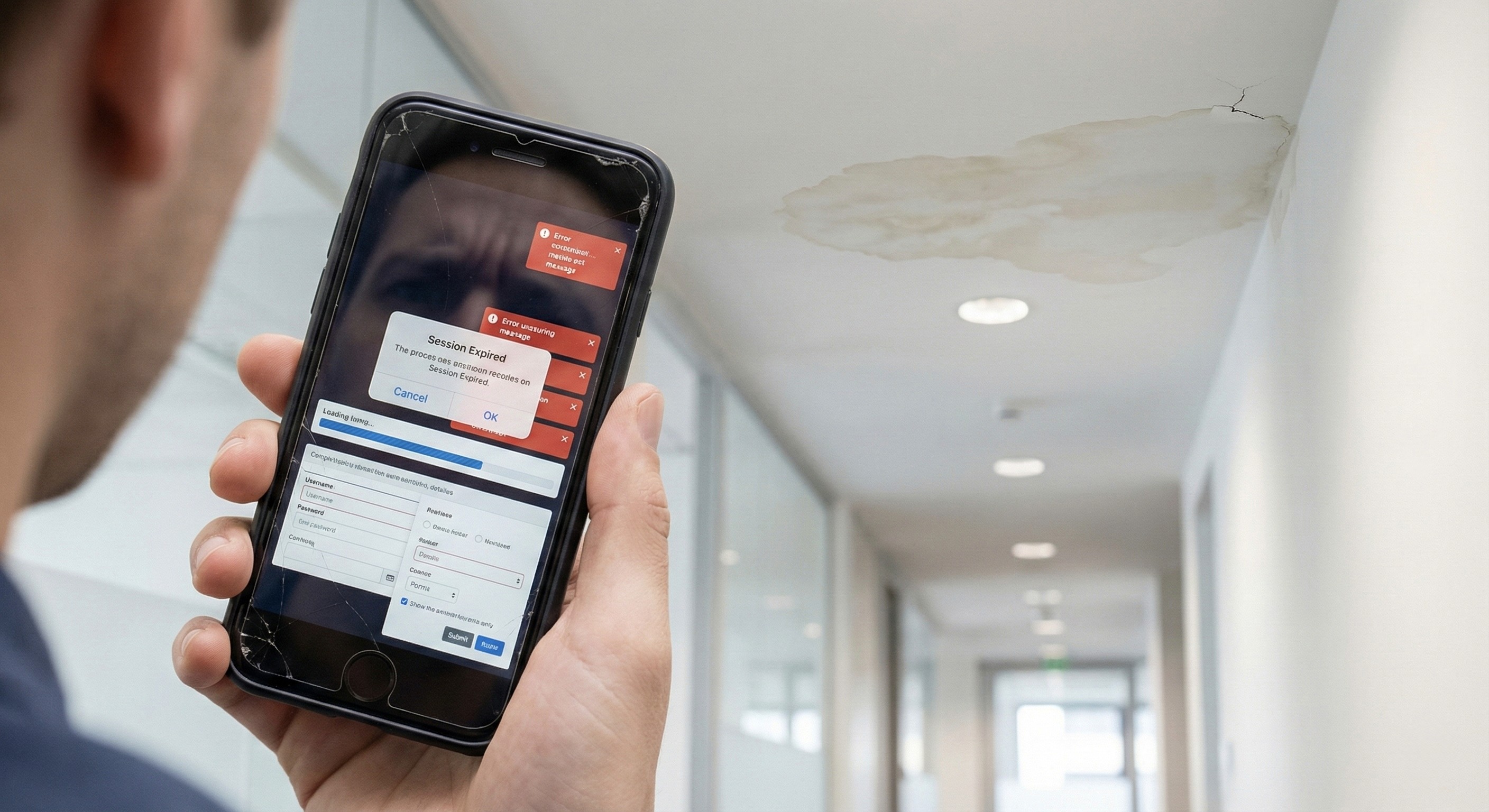
The Silent Threat: Why "Access Friction" is the Enemy of Asset Management
In the environment of facilities management, the most dangerous assets are not the ones that have been damaged and recorded by the system, but the ones that are failing silently without your knowledge that remain unnoticed. Many organisations make a fatal strategic mistake when deploying software: they unintentionally create operational obstacles for reporting problems.
The last mile of facilities management is often a psychological issue rather than a technical one. If there is any disturbance when reporting a simple fault, such as the need to fill out a complex spreadsheet, the vast majority of employees and building users will instinctively choose to remain silent. Human nature follows the path of least resistance; when reporting a problem becomes more difficult than expected, the consequence is to ignore it. The mindset shifts to "that’s not my job" or "it's annoying, I'll do it later." Therefore, crucial early warning signals are systematically filtered out before they reach your dashboard.
The cost of such silence is often extremely high, leading to a chain reaction that we call invisible maintenance debt. A minor issue, such as a rattling fan belt or a blocked condensate drain, might only require a standard $350 routine commercial call-out to resolve. But due to the inconvenience of system operation, the small issue got ignored. This workflow friction eventually causes the commercial HVAC compressor to overwork and fail, turning a routine fix into a $8,000 to $12,000 emergency replacement. The truth is, this opacity of your systems is caused by workflow frictions.
To eliminate these operational blind spots, modern facility management must undergo a transition from the "gatekeeper model" (relies on a small number of technicians to detect faults) to the "crowdsourcing model" (each building user is regarded as an observer). FM software should support frictionless capture. 4 maintenance technicians cannot simultaneously monitor every corner of the building, but hundreds of employees, tenants or students can.
In facilities management, what is unknown often comes at the highest cost.
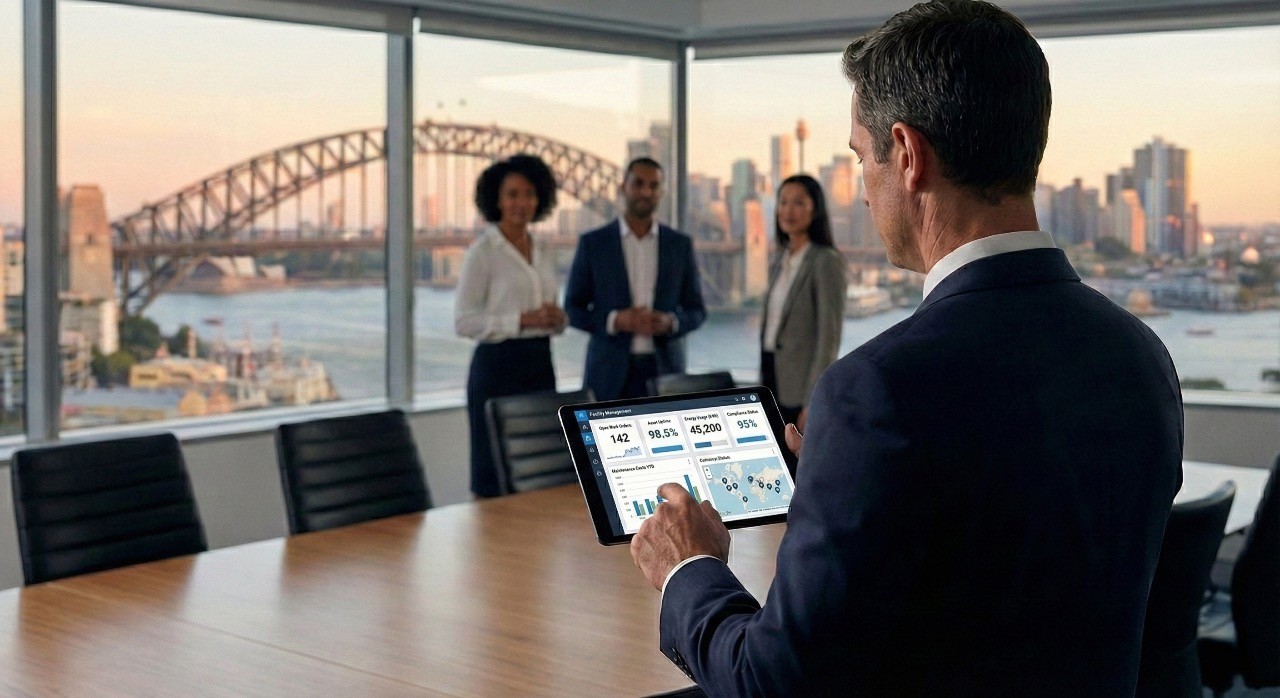
The Choice is Yours
As we enter this new era, the gap between the "digital leaders" and the "digital laggards" in the FM industry is widening. Digital leaders have achieved full transparency, can relax by knowing their ecosystem operates like thousands of sensors seamlessly collecting data, and their compliance operations are automated and auditable. However, digital laggards still rely on filtering out key information through complex login interfaces, and hoping that their spreadsheets are up-to-date.
For decision-makers, the summary is straightforward. Priority should be given to platforms that adopt the crowdsourcing model, provide convenient reports for each building user, and have the necessary depth of local compliance measures required in Australia. The appropriate softwareis a structural foundation of safe, transparent, and high-performing portfolios.