Hidden Costs of Poor Facilities Management in Aged Care
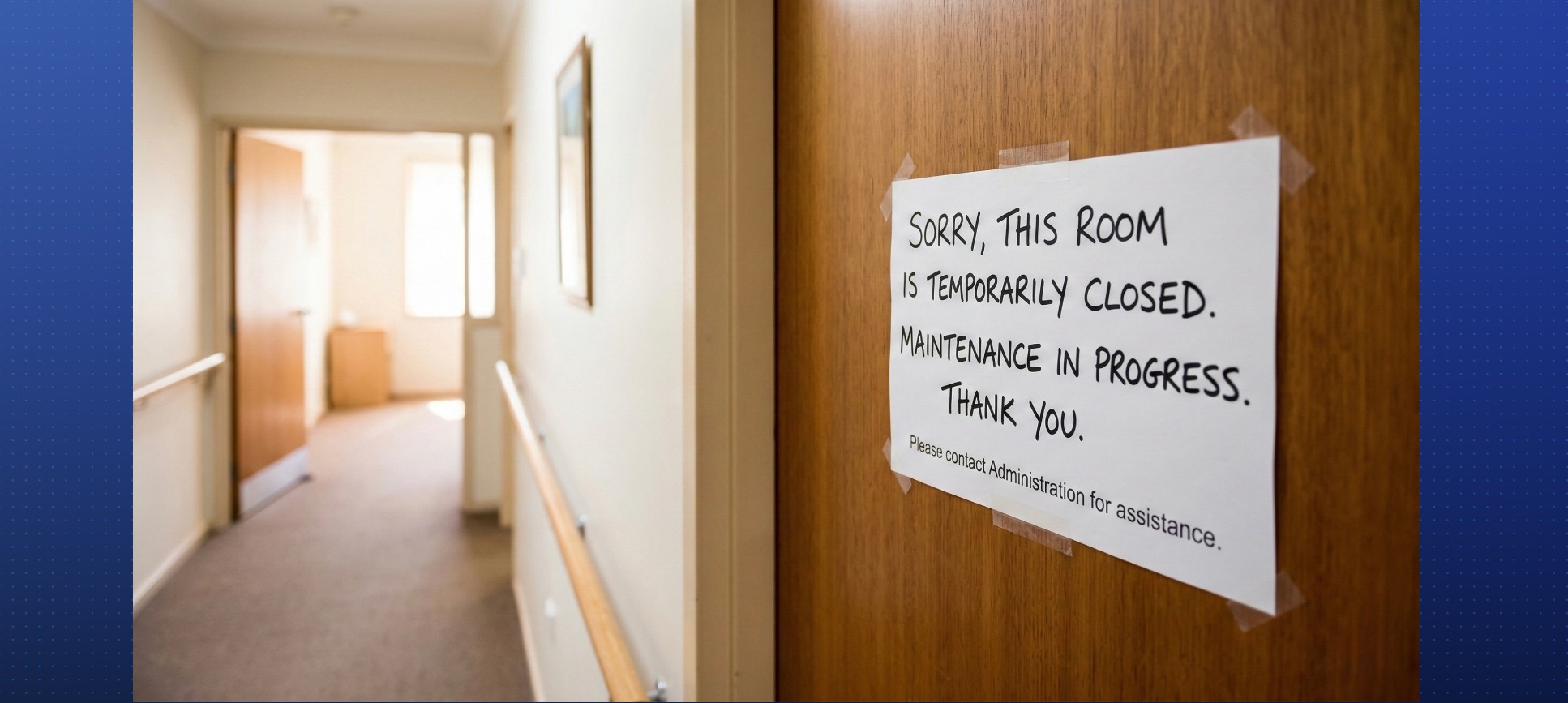

When a key asset in your aged care facilities breaks down, what is the actual cost to your business?
Most facility managers are used to looking directly at the contractor's invoice to answer this question. They review the cost of parts, the hourly labour rate, and the emergency call-out fee, and see this as the total spend of the incident.
However, this narrow view of operating expenses is exactly why many facility managers find themselves paying unnecessary costs for their buildings. In facility management, the physical environment has an essential connection to the business success of the firm. Treating maintenance as just a record of repairs and ignoring the financial chain will affect the breakdown that it has on the organisation.
To create a truly efficient portfolio, we need to first understand the difference between visible expenses and the invisible issues that are consuming funds in the background. Let’s explore how shifting to a more proactive facility strategy can uncover new efficiencies and strengthen your bottom line.
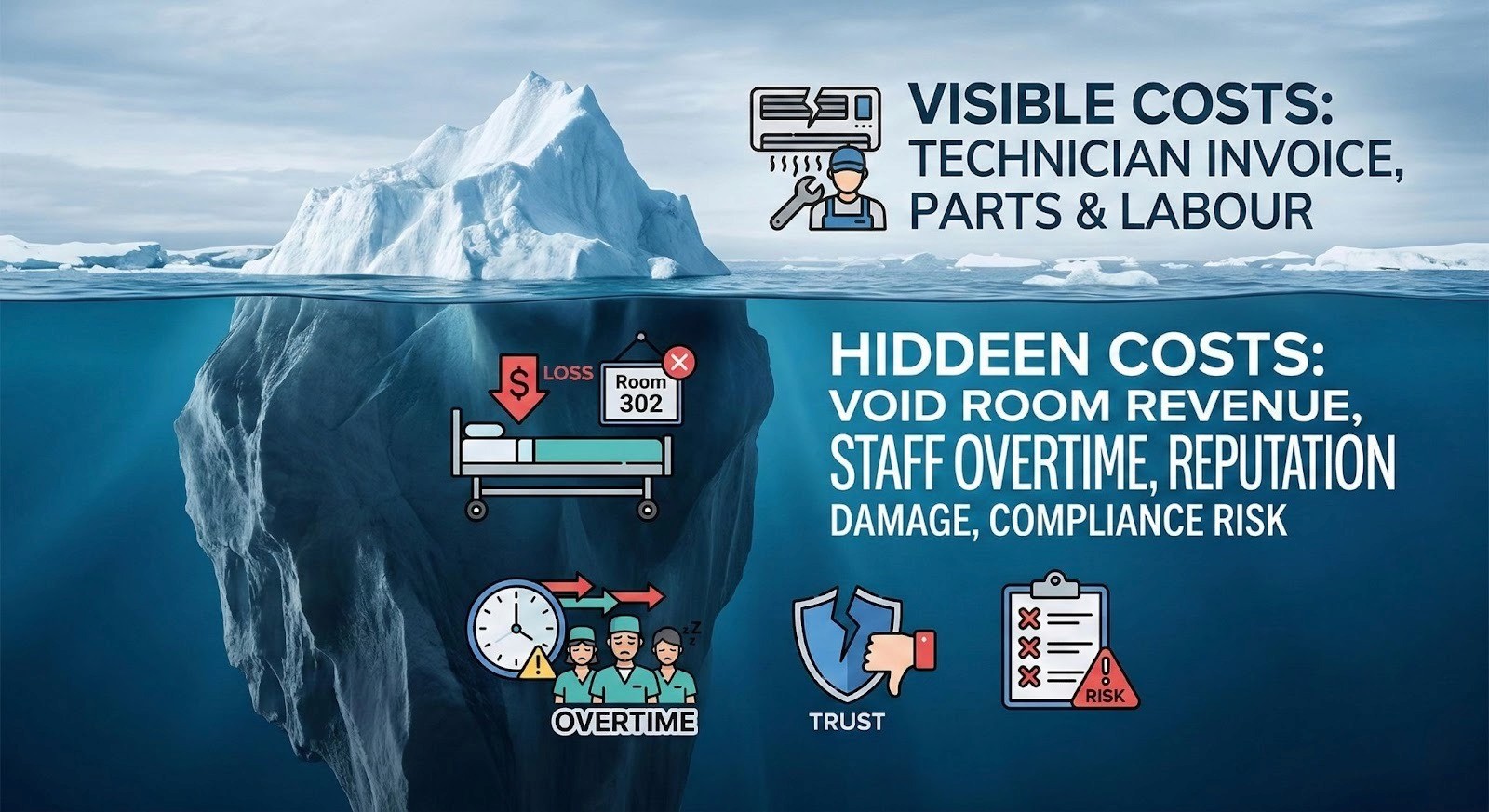
Defining the Hidden Cost
In facilities management the calculation of visible costs is straightforward. It refers to the tangible costs of services or products. If a commercial oven requires replacing a new heating element, the cost would be the price of the component and the time spent by the technicians to install it. These are the numbers that are easily tracked, budgeted for, and reported to the management team at the end of the quarter.
A hidden cost is the financial loss resulting from operational disruptions caused by equipment breakdown and failures. These costs are difficult to quantify as there are no corresponding bills, and no specific tracking codes in your accounting software to record them. Instead, they are hidden within broader business metrics: a decline in overall revenue, an increase in overtime hours for employees, or a gradual decrease in facility utilisation.
When unmaintained assets interfere with the business operations of your firm, hidden costs will arise. For example in an aged care facility, if nursing staff spend an hour relocating residents due to a facility issue instead of providing care, that hour still incurs the same wage costs.
A major failure that occurred on a public holiday may not be detected during a scheduled workday inspection, leading to additional emergency fees that need to be paid. Most importantly, in the context of aged care, hidden costs manifest as the total loss of income when a space can no longer be safely used.
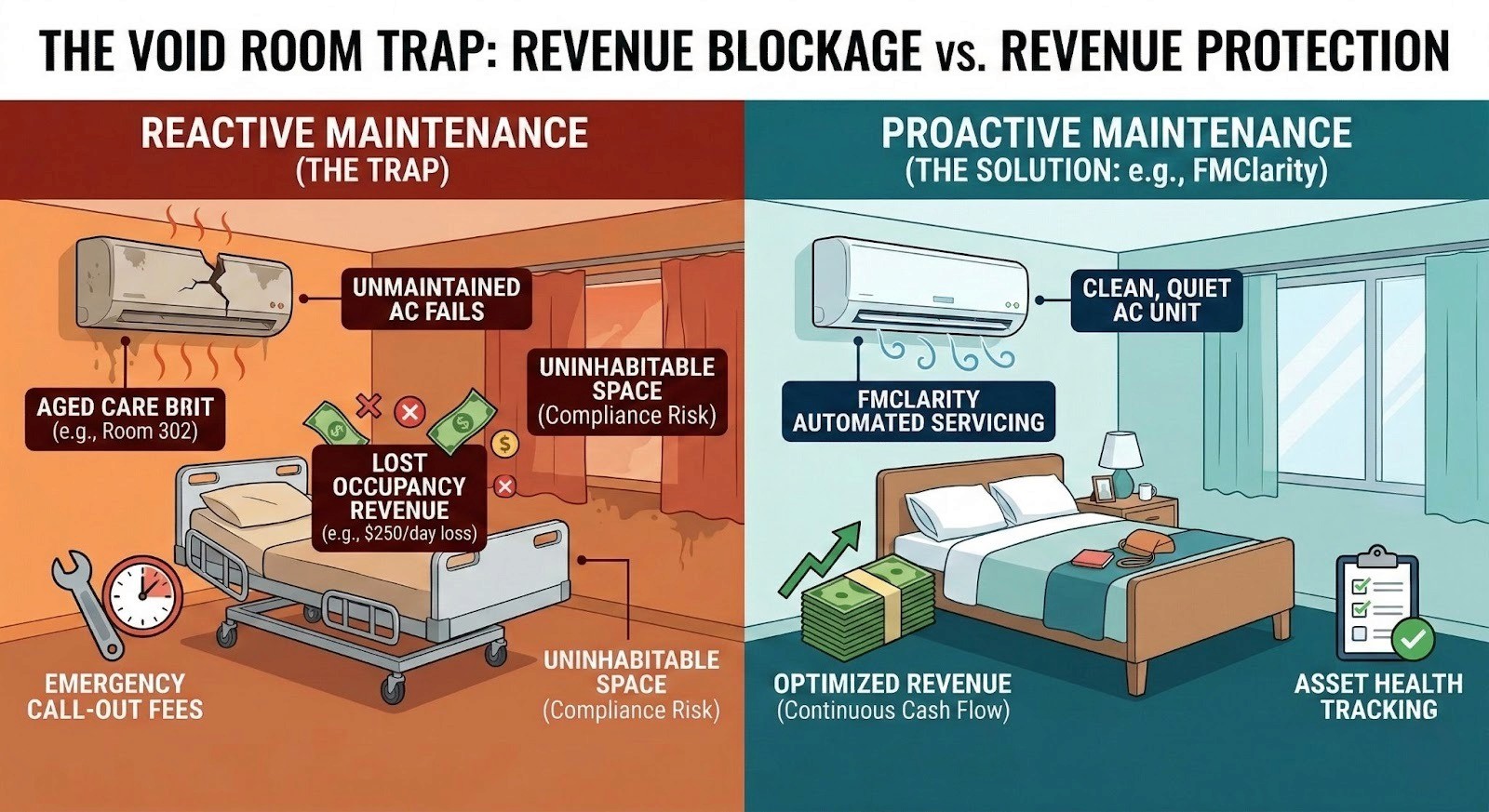
The Void Room Trap
To understand how rapidly these hidden costs can accumulate, let's consider a common scenario driven by reactive maintenance as an example.
Imagine a lengthy period of extremely hot weather. In aged care facilities, maintaining safe indoor temperatures is a regulatory requirement that directly impacts resident health and wellbeing. Yet in facilities operating under a passive maintenance model, where equipment is only repaired once it fails, essential systems may go unchecked before seasonal changes.
When the heatwave arrives, the air-conditioning compressor in one private suite which had not been serviced in advance, could suddenly stop working. As a result the suite would become unsuitable for occupancy, triggering an urgent maintenance response and disruption to daily operations.
The visible cost of this incident is frustrating, but it is within manageable limits. The facility manager has to pay a high emergency call-out fee due to the urgent maintenance needs and a shortage of contractors during the heatwave. The parts required to fix the ageing system have to be ordered and delivered within days, and the physical repair takes hours of intensive labour.
However, the most significant impact on your profit margin happens quietly behind the scenes. For example, if an air conditioning system has failed, that specific suite has immediately become uninhabitable. This violated the care standards and posed a health risk, meaning it cannot be occupied by a current resident, nor can it be offered to a new family seeking placement. Suddenly, the room has become a void room.
While the facility manager waits days or even weeks for the contractor to source parts and complete the repair, the business is losing its daily residency fee. If a preventive maintenance plan is implemented, the failure of the system can be detected several months in advance, allowing for planned and cost-effective replacement. However, due to the reliance on reactive maintenance, this directly resulted in a blocked revenue stream, turning a profitable asset into a financial liability.
Modernising Your Maintenance Strategy
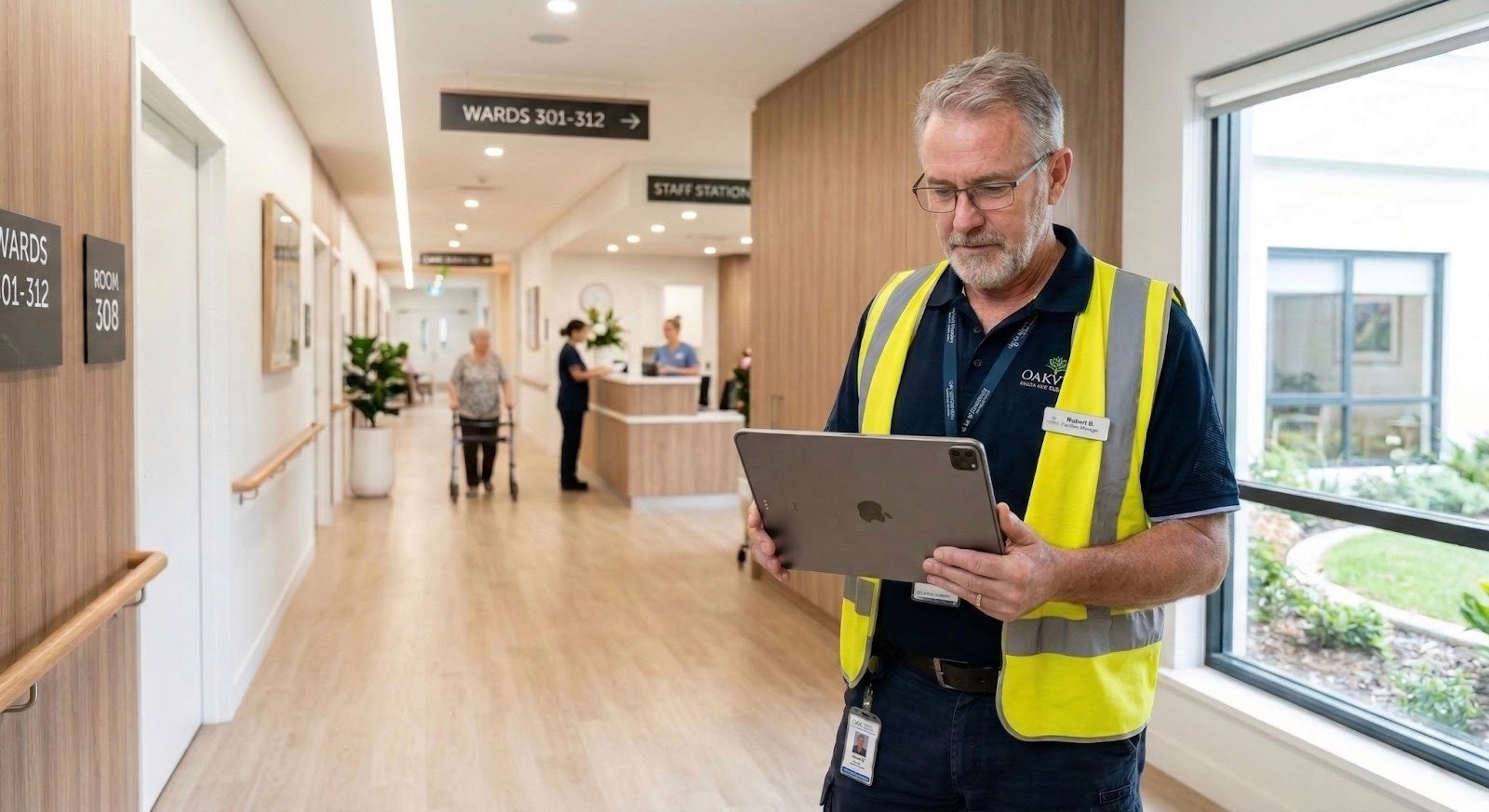
Breaking the cycle of reactive maintenance requires moving away from fragmented spreadsheets, paper dockets, and memory-based scheduling. Facility managers need to have comprehensive control over the entire facility portfolio in order to prevent problems before they occur. This is where dedicated facilities management software occurs, which can fundamentally change how a building operates. By consolidating all property data into a single, intuitive platform, facilities managers can avoid the occurrence of void rooms due to guesswork and emergency falls.
One of the primary ways software protects your revenue is through automated preventative maintenance scheduling. Well before the summer heat arrives, the system automatically notifies your preferred HVAC contractors to conduct routine servicing, clean filters, and check refrigerant levels. This ensures that assets are maintained to a certain standard, reducing the possibility of any failures and unwanted revenue losses.
Compliance
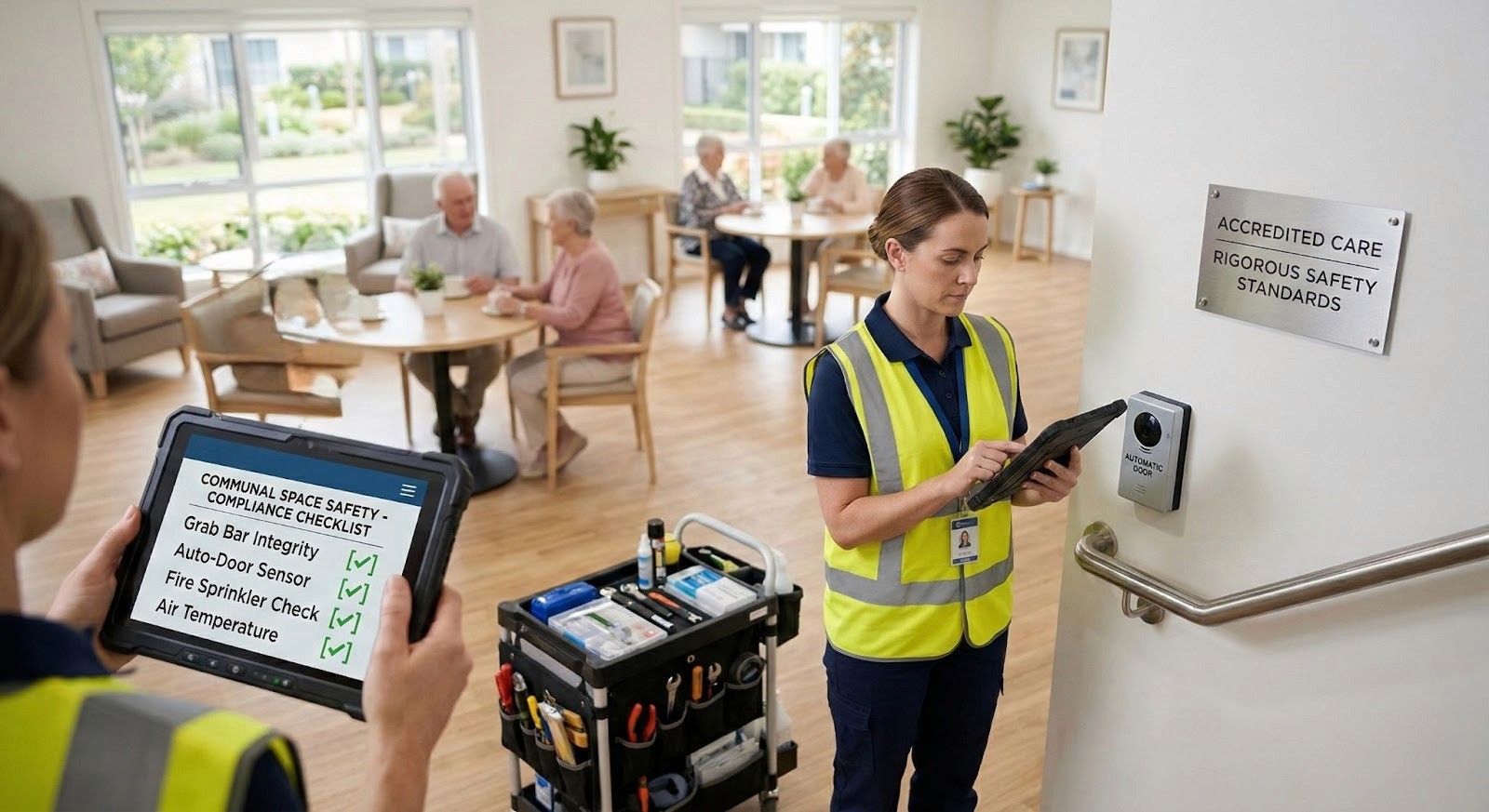
Beyond protecting revenue and maintaining occupancy rates, proactive facilities management is essential for navigating the strict compliance landscape of the aged care sector. Providers are required to demonstrate that they are actively maintaining a safe environment that meets rigorous quality standards.
When maintenance records are scattered across email chains, physical logbooks, and individual contractor portals, preparing for a compliance audit becomes an administrative nightmare. Missing documentation can lead to different penalties or sanctions, creating an entirely new category of financial risk.

Calculate Your ROI
The transition from a reactive, break-fix approach to a proactive management strategy not only makes a facility manager’s day easier, but also protects the commercial viability of the entire organisation. Ignoring the hidden costs in maintenance work is an unacceptable risk for an aged care provider.
Equipping your team with the right digital tool can make the performance of your investment portfolio crystal clear. There is no need for guesswork or waiting for the annual financial review to understand where the maintenance budget has gone.
By capturing the right data daily, you put the control firmly back in the hands of your facilities team. Stop letting preventable breakdowns dictate your budget and your occupancy rates. It’s time to see exactly how much revenue you can reclaim by taking control of your maintenance operations. Our ROI Calculator can help you test your savings today and help you eliminate hidden costs and build a more resilient, profitable facility for you and your teams.